Why Diesel Prices Are So High Right Now
U.S. diesel averaged $5.695 a gallon on November 23, 2026, up $1.86 from a year ago, EIA says. The main reason is a global shortage of refined fuel after damage to refineries in the Middle East and Russia. EIA expects diesel to average $5.03 in 2027, still high.
By News Desk · · Updated Nov 25, 2026
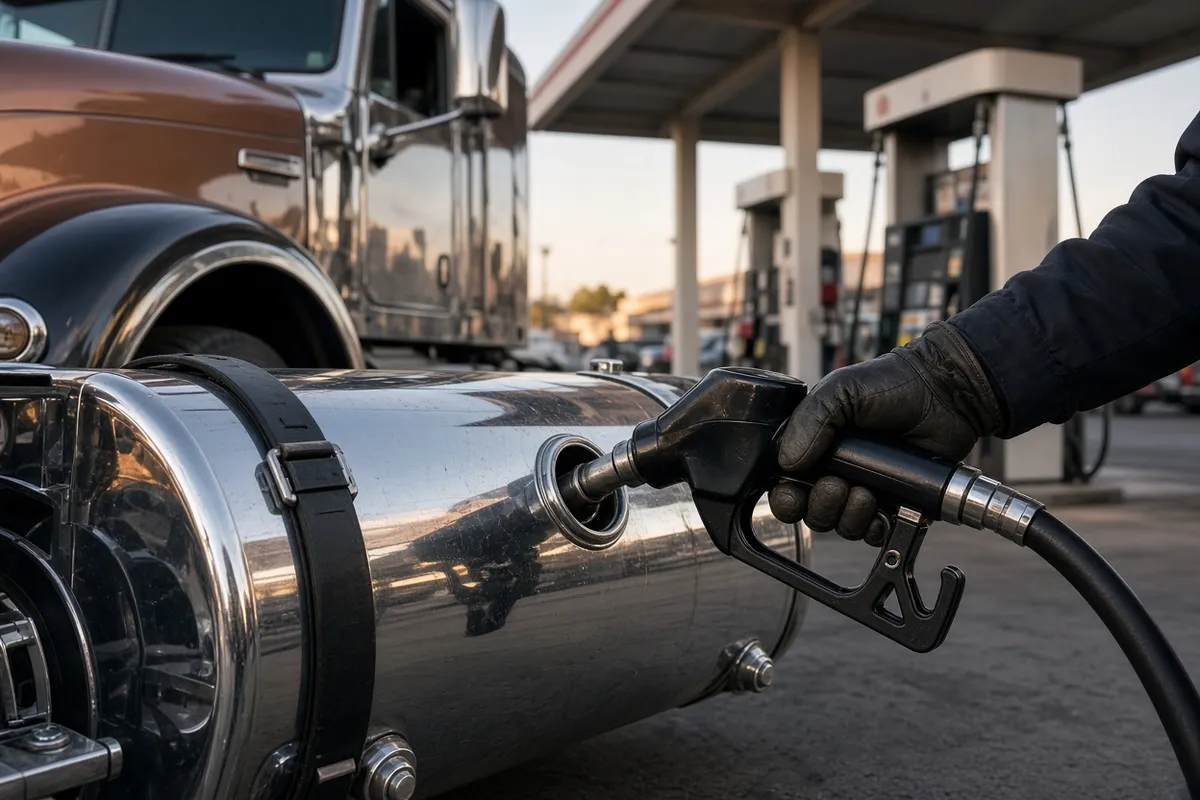
Diesel prices this week
The EIA weekly survey put the U.S. average for on-highway diesel at $5.695 a gallon on November 23, 2026. That is 24 cents lower than a week earlier and 60 cents lower than on November 2. It is still $1.86 higher than a year ago.
| Region | Nov. 23, 2026 | Change from a year ago |
|---|---|---|
| U.S. average | $5.695 | +$1.864 |
| East Coast | $5.619 | +$1.757 |
| Midwest | $5.671 | +$1.821 |
| Gulf Coast | $5.294 | +$1.835 |
| Rocky Mountain | $5.772 | +$2.049 |
| West Coast | $6.709 | +$2.195 |
| California | $7.436 | +$2.453 |
EIA posts new prices every week. We update this table when the next release is out.
Why is diesel so expensive?
The short answer: there is not enough refined fuel in the world, and refiners are getting paid well for every gallon they make.
In its November outlook, EIA says refineries in the Middle East and Russia were damaged this year. That cut the amount of diesel and other fuels they ship to the world market (EIA, U.S. petroleum products). With less fuel to go around, the gap between the price of crude oil and the price of fuel, called the crack spread, stayed high. U.S. refineries are running hard to cash in, but they cannot fill the whole gap.
Crude oil costs more too. EIA expects West Texas Intermediate crude to average $88 a barrel in 2026, up from $65 in 2025.
The West Coast has its own problem. EIA notes that Valero closed its Benicia refinery in Northern California in early 2026, so the region has less refining capacity than a year ago.
Why is diesel more expensive than gas?
Diesel used to cost less than regular gasoline most of the year. That changed in 2004. Since September 2004, diesel has generally cost more, EIA explains, because world demand for diesel and other distillate fuels kept growing. The switch to ultra-low sulfur diesel also raised the cost of making and moving it.
Taxes add to the gap. The federal tax on diesel is 24.4 cents a gallon. As of January 2026, state taxes and fees on diesel averaged 35.86 cents a gallon.
This year the refinery problems hit diesel harder. On November 23, diesel cost $2.05 more than regular gasoline, which averaged $3.642.
When will diesel prices go down?
EIA expects some relief, but not a return to 2025 prices. Its forecast from November 10, 2026 (Short-Term Energy Outlook):
| Year | Average retail diesel |
|---|---|
| 2024 | $3.76 |
| 2025 | $3.66 |
| 2026 | $5.25 (forecast) |
| 2027 | $5.03 (forecast) |
EIA raised its 2027 diesel forecast by 12% from the month before. It now assumes fuel markets will stay tight through the end of 2027. EIA expects most of the disruption in early 2027, with supply easing later in the year. Bad weather or refinery outages could change the picture.
How much am I paying extra in a year?
Here is a simple example. The miles and fuel economy are our assumptions. Put in your own numbers.
- 100,000 miles a year at 6.5 miles per gallon is about 15,400 gallons.
- Every $1 a gallon adds about $15,400 a year.
- At this week’s price, $1.86 more than a year ago, that is about $28,700 more for the year.
For a company driver, the carrier pays at the pump. But high fuel can squeeze rates, miles and raises. For an owner-operator, it comes straight out of the settlement unless a surcharge covers it. Insurance is the other big fixed bill: see what federal rules require for semi truck insurance.
What is a fuel surcharge?
A fuel surcharge is an extra charge on a load that moves with the price of diesel. EIA says many shippers and truckers use its weekly diesel price in their formulas, but every company sets its own method (EIA on fuel surcharges).
If you are leased on or run your own authority:
- Ask which EIA price your surcharge uses, national or regional, and how often it updates.
- Ask what base fuel price the surcharge starts from. The lower the base, the more of the price rise it covers.
- Compare the surcharge you get with what you actually spend on fuel each week.
For this week’s numbers, see the latest EIA diesel price report on CDL Times. Fuel tax paperwork is covered in IFTA explained (CDL Reporter).
More news on costs and income is in our Owner-Operator section.
What it means for drivers
- Diesel is about $1.86 a gallon higher than a year ago. For a truck that burns 15,000 gallons a year, that is about $28,000 more.
- Prices are falling from early November, but EIA still expects about $5 a gallon on average in 2027.
- California is the most expensive at $7.44. The Gulf Coast ($5.29) and Lower Atlantic ($5.38) are the cheapest.
- Owner-operators: check that your fuel surcharge follows EIA's weekly price, and plan fuel stops by region.
Sources
- EIA: Gasoline and Diesel Fuel Update (week of Nov. 23, 2026)Primary source
- EIA: Short-Term Energy Outlook (Nov. 10, 2026)Primary source
- EIA: Short-Term Energy Outlook, U.S. petroleum products (Nov. 10, 2026)Primary source
- EIA: Diesel prices and outlookPrimary source
- EIA: Diesel fuel surchargesPrimary source
Published · Updated
Editorial team
The news desk picks stories that matter to US truck drivers, checks every fact against the original source and links to it.