DOT vs. Non-DOT Drug Test: The Difference
A DOT drug test is the federal test every CDL driver takes, with five fixed drug classes and strict procedures. A non-DOT test is a company test under the employer's own policy. It can check more drugs or use hair, but it must be kept fully separate from the DOT test and uses a different form.
By News Desk ·
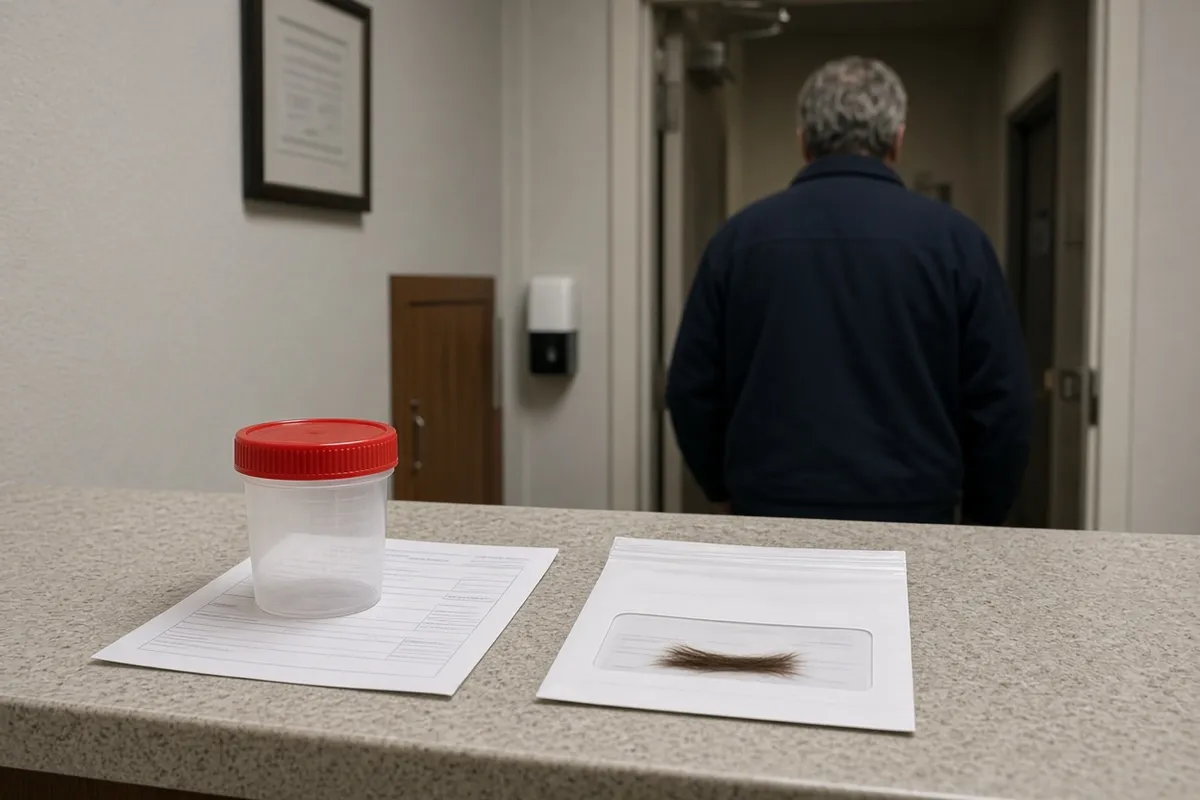
If a carrier sends you for a “non-DOT” test, it is not the federal test. It is the company’s own test, run under its own policy. Here is how the two differ and what each one can mean for your CDL.
DOT vs. non-DOT at a glance
| DOT drug test | Non-DOT drug test | |
|---|---|---|
| Who requires it | Federal rules (49 CFR Part 40 and FMCSA Part 382) | The employer’s own policy |
| Drugs checked | Five classes only: marijuana, cocaine, opioids, amphetamines, PCP | Whatever the company policy says, can be more |
| Specimen | Urine or oral fluid only | Urine, hair or others, by company policy |
| Paperwork | Federal Custody and Control Form | Must not use the federal form |
| Clearinghouse | DOT results and violations are reported (382.705) | Not on the list of what must be reported |
| After a positive | Off the road, SAP process before driving again | Depends on company policy |
What is a non-DOT drug test?
FMCSA allows carriers to run a “company authority” testing program on top of the required DOT testing. FMCSA says that under a non-DOT program, the employer can test for other drugs and can use specimens other than urine.
The list of drugs, often called the “panel,” is set by the company, not by DOT.
Any extra company policy must be clearly described as based on the employer’s own authority, not on DOT rules. Ask for the written policy if you are not sure which test you took.
The two tests must stay separate
Part 40 is strict about this. Under 49 CFR 40.13:
- DOT tests must be completely separate from non-DOT tests in every way.
- When both are done, the DOT test goes first and must be finished before the non-DOT test begins.
- A DOT sample must not be tested for extra drugs. For a non-DOT urine test, a separate sample is collected.
- The federal custody form must not be used for non-DOT tests.
- No one can change or ignore a DOT result because of a non-DOT result.
So if you give one cup for both, something is wrong. You should see two collections and two different forms.
Can an employer test for more drugs?
Yes, but only in a non-DOT test. The DOT test always checks the same five drug classes, with fixed cutoffs set in 49 CFR 40.85. If a carrier wants to check other drugs, or use a hair test, it has to do that as a separate company test.
Does a non-DOT test go to the Clearinghouse?
The Clearinghouse reporting rule, 49 CFR 382.705, lists what must be reported. Medical Review Officers report verified positive, adulterated or substituted DOT test results and refusals. Employers report DOT alcohol results of 0.04 or more, refusals, return-to-duty and follow-up test results, and other violations of FMCSA’s Part 382 rules.
A non-DOT company test is not on that list.
That does not mean a non-DOT positive has no effect. Your employer can still act on it under its own policy. And under 49 CFR 40.13, a non-DOT result cannot be used to change a DOT result, in either direction.
Does a failed non-DOT test affect my CDL?
A failed DOT test takes you off the road until you finish the return-to-duty process with a Substance Abuse Professional (49 CFR 40.285). That process is tied to DOT violations.
A non-DOT result works through company policy, not through the DOT return-to-duty process. Before you take any test, ask which kind it is. If you are told it is DOT, the collector must use the federal Custody and Control Form. If the paperwork does not match, ask before you give a sample.
Do not refuse either one
Refusing a DOT test is generally treated the same as testing positive, FMCSA says. For a non-DOT test, a refusal has whatever consequence the company policy sets. In both cases, DOT’s advice to employees applies: take the test first, then raise your concerns with the employer.
New drivers meet the DOT test first: you need a negative pre-employment result before your first trip. If you are still choosing a license, see Class A vs. Class B CDL.
For the full list of DOT drug classes and cutoff levels, see what a DOT drug test checks for on CDL Reporter.
More rule news for drivers is in our Driver Rules section.
What it means for drivers
- DOT test: federal rules, five drug classes, urine or oral fluid only, the federal custody form.
- Non-DOT test: company policy. It can check more drugs and use other specimens, like hair.
- The two tests must be separate. A DOT sample cannot be tested for extra drugs.
- The Clearinghouse rule covers DOT test results and DOT rule violations. Read the company policy to see what a non-DOT result means for your job.
Sources
- 49 CFR 40.13: How do DOT drug and alcohol tests relate to non-DOT tests?Primary source
- FMCSA: What substances are tested? (note on non-DOT testing)Primary source
- DOT ODAPC: Employee questions and answersPrimary source
- 49 CFR 382.705: Reporting to the Drug and Alcohol ClearinghousePrimary source
- 49 CFR 40.85: DOT drug classes and cutoffsPrimary source
- 49 CFR 40.285: When is a SAP evaluation required?Primary source
- FMCSA: When does testing occur and what tests are required?Primary source
- FMCSA: What if I fail or refuse a test?Primary source
Published
Editorial team
The news desk picks stories that matter to US truck drivers, checks every fact against the original source and links to it.