Class A vs. Class B CDL: Which One to Get
Get a Class A CDL if you want to drive tractor-trailers or keep the most job options open. It also lets you drive Class B and C vehicles with the right endorsements. Choose Class B for local work in a straight truck or bus, like a dump, box or garbage truck.
By News Desk ·
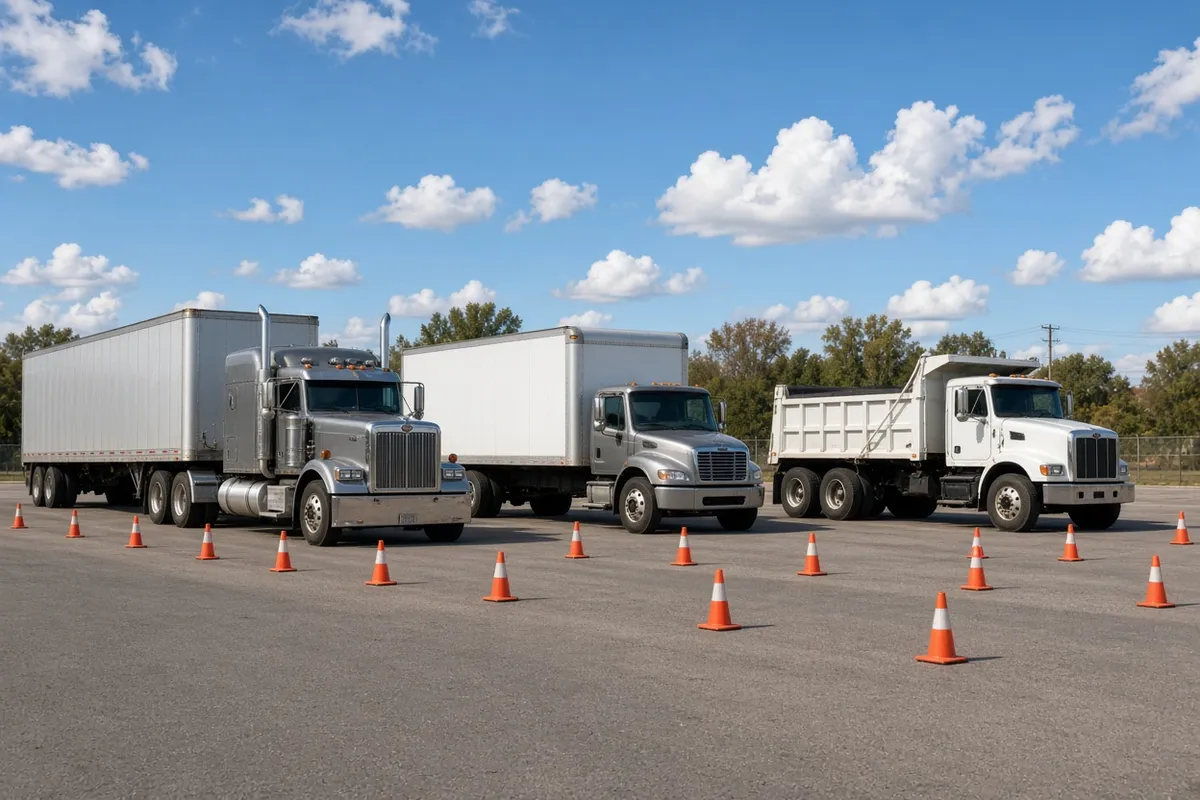
The CDL class depends on what you will drive: how heavy the truck is and whether it pulls a heavy trailer. The federal definitions are in 49 CFR 383.91. Every state uses them, though states may add their own rules on top.
Class A vs. Class B vs. Class C at a glance
| Class A | Class B | Class C | |
|---|---|---|---|
| What it covers | Combination vehicles | Heavy single (straight) vehicles | Smaller vehicles that carry 16+ people or placarded hazmat |
| Weight rule | Combination weight rating 26,001 lb or more, and the towed unit is over 10,000 lb | Single vehicle rated 26,001 lb or more, towing 10,000 lb or less | Does not meet Class A or B weights |
| Typical vehicles | Tractor-trailers, tankers, flatbeds, doubles | Dump trucks, box trucks, garbage trucks, buses | Small hazmat trucks, passenger vans for 16 or more |
| Can also drive | Class B and C, with the right endorsements | Class C, with the right endorsements | Class C only |
The key line is the trailer. Once the trailer you tow has a rating over 10,000 pounds and the whole rig is over 26,000 pounds, you need Class A.
What can you drive with a Class B CDL?
A Class B covers any single vehicle with a gross vehicle weight rating of 26,001 pounds or more. You can tow a trailer with it, as long as that trailer is rated at 10,000 pounds or less.
That covers most local straight-truck work: dump trucks, cement mixers, large box trucks, and garbage and recycling trucks. With a passenger (P) endorsement it also covers transit and school buses. A school bus also needs the S endorsement.
What a Class B does not cover: a tractor pulling a semi-trailer, or a straight truck pulling a trailer heavier than 10,000 pounds.
What can you drive with a Class A CDL?
A Class A covers combination vehicles, mostly tractor-trailers. Under 383.91(c), a driver who passed the Class A tests may also drive Class B and Class C vehicles, as long as they hold the endorsements needed for that vehicle. A Class A driver who wants to drive a school bus still needs the P and S endorsements.
This is why many schools and carriers point new drivers to Class A first. It opens more doors, including over-the-road jobs that a Class B cannot reach.
Watch for restrictions on your license
Where you test matters. Under 49 CFR 383.95, your state adds a restriction to your CDL if:
- you take the skills test in a truck with an automatic transmission: you cannot drive a manual;
- you test in a truck without air brakes, or fail the air brake knowledge test: you cannot drive a truck with air brakes;
- you test for Class A with a pintle hook or other non-fifth-wheel hookup: you cannot drive a tractor-trailer with a fifth wheel.
Before you book a test truck, ask what restriction it will put on your license and whether your future employer cares.
Training and age
Since February 7, 2022 (49 CFR 380.603), anyone getting a Class A or Class B for the first time must complete entry-level driver training (ELDT) from a provider on FMCSA’s Training Provider Registry before testing (49 CFR 380.609). The same rule applies to upgrades, such as Class B to Class A, and to a first-time P, S or H endorsement.
To drive a commercial vehicle across state lines, you must be at least 21 (49 CFR 391.11). Rules for drivers under 21 who stay inside one state are set by each state, so check yours.
Before your first trip, you also need a negative DOT pre-employment drug test. Here is how it differs from a company test: DOT vs. non-DOT drug test.
Class A vs. Class B pay
The Bureau of Labor Statistics does not split pay by CDL class. It groups heavy straight-truck drivers and tractor-trailer drivers together. Here is what its May 2025 data shows:
| Job group (BLS) | Median yearly pay |
|---|---|
| Heavy and tractor-trailer truck drivers, all industries | $58,640 |
| Same, in the truck transportation industry | $60,320 |
| Same, in construction | $56,080 |
| Transit and intercity bus drivers | $59,050 |
| School bus drivers | $47,920 |
For heavy and tractor-trailer drivers, the lowest 10% earned under $40,140 and the top 10% earned over $79,380, according to the BLS Occupational Outlook Handbook. BLS notes that long-haul drivers are usually paid by the mile plus bonuses. Bus driver figures come from the BLS bus drivers page.
Because BLS does not split the data, the best guide is real job offers near you. Compare pay, how it is paid (per mile or per hour) and home time for Class A and Class B jobs before you decide.
Which CDL is better to start with?
Pick Class A if:
- you want over-the-road, regional or tanker and flatbed work;
- you want the most job options later;
- you are ready for training on a tractor-trailer, including backing and coupling.
Pick Class B if:
- you want to be home every night;
- you are aiming at a specific local job: dump truck, garbage truck, delivery or bus;
- you are sure you will not pull a tractor-trailer.
Can I go from Class B to Class A later?
Yes. You will need Class A entry-level training from a registered provider, then the Class A knowledge and skills tests (49 CFR 380.609 and 383.91(c)). Many drivers start in Class B for local work and upgrade later. If you already know you want tractor-trailer work, going straight to Class A saves you a second round of training and testing.
Class C and “regular” licenses
A CDL Class C is for vehicles that are not heavy enough for Class A or B but carry 16 or more people, including the driver, or carry hazmat that needs placards. Some states also use “Class C” as the name for a regular driver’s license. That is not a CDL. Check your state’s license names so you know which one you are looking at.
Once you pick a class, here is how long it takes to get a CDL, step by step (CDL News).
More on getting a CDL is in our Getting Your CDL section.
What it means for drivers
- Class A: tractor-trailers and other combinations over 26,000 pounds where the trailer weighs more than 10,000 pounds.
- Class B: a single truck or bus over 26,000 pounds, towing no more than 10,000 pounds.
- With a Class A you can also drive Class B and C vehicles, if you have the needed endorsements. Not the other way around.
- Moving up from B to A later means new entry-level training and new tests.
Sources
- 49 CFR 383.91: Commercial motor vehicle groupsPrimary source
- 49 CFR 383.95: CDL restrictionsPrimary source
- 49 CFR 380.609: Entry-level driver training requirementsPrimary source
- 49 CFR 391.11: General qualifications of driversPrimary source
- BLS: Heavy and tractor-trailer truck drivers, Occupational Outlook Handbook (pay data for May 2025)Primary source
- BLS: Bus drivers, Occupational Outlook Handbook (pay data for May 2025)Primary source
Published
Editorial team
The news desk picks stories that matter to US truck drivers, checks every fact against the original source and links to it.